
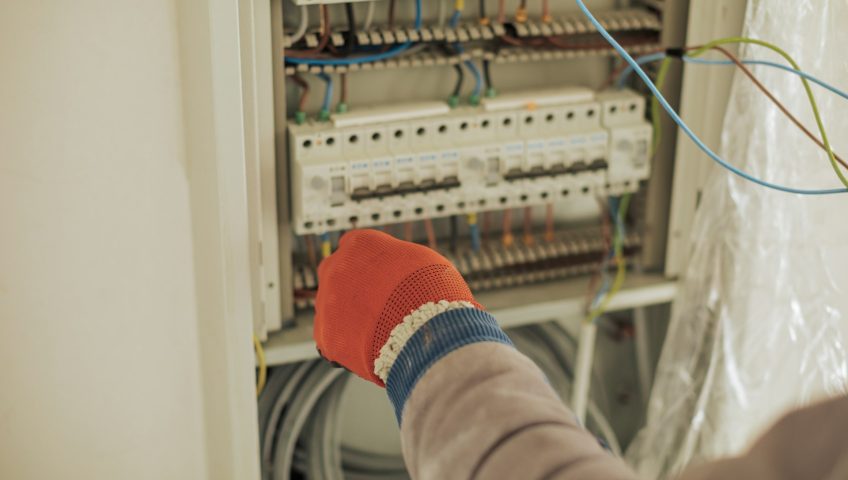
Protect Your Facility with a Smarter, Safer Electrical Panel
When you walk into your office, warehouse, or retail shop, you probably do not give a second thought to that dull metal cabinet tucked away in the back hallway or maintenance closet. But that box, your electrical panel, is effectively the heart of your entire operation. It takes high-voltage power from the utility line and breathes life into everything from your servers and HVAC units to the breakroom coffee maker that keeps the team moving.
However, just like a human heart, an electrical panel can get “clogged” or dangerously overworked. As businesses grow and technology moves faster, we end up asking way more of our infrastructure than it was ever meant to give. If your building’s electrical system is a relic of the late 90s (or earlier), it is likely gasping for air in a world of high-speed data and electric vehicle chargers. Upgrading your panel is not just a boring maintenance chore. It is a high-stakes move to protect your property, your staff, and your daily revenue.
When “Quirks” Become Red Flags: Spotting the Real Trouble
In many older commercial buildings, staff and managers just get used to living with electrical “personalities.” You learn which microwave trips the breaker if the printer is running, or you learn to ignore that weird hum coming from the wall. In a professional setting, those are not just quirks. They are early warning signs that your system is on the verge of a costly failure.
1. The “Click” of Death: Constant Tripping
A circuit breaker has one job: shut off power before things get hot enough to start a fire. If your maintenance guy is resetting breakers once a week, the system is screaming at you. Constant tripping means you have exceeded the “safe” capacity of that circuit. Beyond being a fire risk, it leads to “soft” costs like frustrated employees and interrupted workflows that can bleed a company dry in lost productivity.
2. The “Ghost in the Machine”: Flickering and Dips
Do the lights dim for a half-second when the rooftop AC unit kicks on? That is called a voltage drop. It means your panel is struggling to pull enough “juice” to meet the initial startup demand of heavy machinery. While it seems minor, these tiny power fluctuations are absolute poison for sensitive electronics. Your servers, high-end computers, and POS systems are slowly being degraded every time the lights flicker.
3. Heat and Smells: The Point of No Return
This is the emergency category. If you walk past your electrical room and catch a whiff of ozone or burning plastic, you are in the danger zone. If you touch the panel cover and it feels warm to the touch, or if you see “scorch” marks (discoloration) around the breakers, you have a loose connection or an internal arc. These are the leading causes of commercial fires. By the time you smell it, the damage is already happening.
4. The “Wall of Shame”: Fuses and Bad Brands
If you open your panel and see screw-in fuses, you are running a museum, not a modern business. Furthermore, the industry knows that certain panel brands from the 70s and 80s (specifically Federal Pacific or Zinsco) are notorious for failing to trip even when they should. If those names are on your equipment, your insurance company likely will not even cover a fire claim if they find out.
The Modern Power Gap: Why Old Gear Fails Today
Think about what a standard office looked like twenty years ago. You had a communal fax machine, a few clunky monitors, and maybe a basic server. Today, the landscape is unrecognizable. We are seeing a massive gap between what old buildings provide and what modern tenants actually need to survive.
The Data-Heavy Facility
Modern companies are packed with high-draw tech. Server rooms need dedicated cooling 24/7. Every single employee has two monitors, a laptop, and a phone charger plugged in. Even your “smart” lighting and building automation systems add a layer of electrical complexity that your building’s original architect could not have imagined in 1995.
The Green Pressure: EV Charging
If you want to attract high-quality tenants or keep your best employees, you are probably looking at Electric Vehicle (EV) chargers. These units are massive power hogs. A standard 100-amp or 200-amp service simply was not built to “refuel” a fleet of Teslas while simultaneously running the building’s industrial chillers.
The “Just One More Thing” Syndrome
As businesses grow, they add “just one more” walk-in cooler, an extra CNC machine, or a high-capacity security system. We see it all the time: a building “making do” with a spiderweb of extension cords and power strips. This is a band-aid on a bullet wound. A real panel upgrade provides a clean, engineered foundation so you can stop worrying about whether adding a new printer will blow the main fuse.
Compliance, Insurance, and the Bottom Line
It is not just about keeping the lights on. It is about staying legal and insurable. The National Electrical Code (NEC) gets updated every three years. These updates are not just red tape. They incorporate new safety tech like Arc-Fault (AFCI) and Ground-Fault (GFCI) protection that saves lives.
Keeping Your Insurer Happy
Insurance companies are getting much stricter. During a renewal or a property appraisal, an inspector will jump straight to your electrical room. If they see an outdated, maxed-out panel, they see a liability. We have seen cases where insurers refuse to renew a policy or double the premium until the electrical distribution system is brought up to modern standards.
Luring High-Value Tenants
If you are a property owner, a modern electrical system is a massive selling point. Smart tenants do their homework. If they see an old, dusty fuse box, they see potential downtime and limited growth. Having a “ready-to-go” 400-amp or 800-amp service makes your space infinitely more attractive for a build-out.
What to Expect From a Professional Panel Upgrade
Most facility managers stay away from upgrades because they fear a week-long blackout. In reality, a professional commercial team treats an upgrade like a choreographed dance.
- The Load Audit: We do not just guess. We look at your peak energy bills and project your growth. If you are planning on adding solar or more machinery in two years, we build that capacity in now so you do not have to do this again.
- The Permitting Headache: Your contractor should handle all the paperwork with the city and the utility company. Often, the utility company has to swap out the wires coming from the street (the “service drop”) to handle the new load.
- The Big Switch: Yes, the power has to go off, but we do not do it at 10:00 AM on a Tuesday. We schedule these for weekends or overnight shifts. For mission-critical spots like medical labs or data centers, we can bring in temporary generators to keep the vitals running during the swap.
- The Map to Your Building: When we are done, you get a clean, organized panel with labels that actually make sense. No more “Mystery Breaker #4.” Having a clearly mapped panel saves you thousands in future troubleshooting costs.
Plan Your Commercial Panel Upgrade
If you recognize any of the warning signs above, are dealing with recurring breaker trips or power quality issues, or are planning tenant improvements, equipment upgrades, or expanded operations, it may be time to look seriously at an electrical panel upgrade. Addressing capacity and distribution proactively, before problems become emergencies, gives you more control over timing, budget, and implementation.
A properly sized and professionally installed panel supports safer operation, more reliable power, better uptime for critical systems, and the technology your business or tenants depend on every day. It can also help your property stay competitive and ready for future demands instead of constrained by outdated electrical infrastructure. For many commercial property stakeholders, that reliability and readiness are among the most valuable benefits of upgrading.
Get Started with Your Project Today
If your commercial facility is showing signs that your current panel is overloaded, outdated, or not aligned with growth plans, ROS Electric is ready to help you plan a safe and efficient electrical panel upgrade. At ROS Electric, we take the time to evaluate your electrical loads, operational needs, and future expansion plans, and recommend solutions that support your business and capital strategy.
Reach out today, and we will schedule a convenient time to review your facility, perform the necessary calculations, and provide a clear, upfront proposal for your commercial electrical assessment, panel upgrade, and system planning.
Write a Comment